I was looking for movie showtimes in Everett (the place I live) and through the wonders of the internet pipes I happened across this fascinating tidbit - Rupert Everett Has Not Cooked A Meal Since 1981
It has something to do with a dinner party that went wrong 25 years ago. He's eaten in restaurants every day since.
I'm not sure who Rupert Everett is but I thought you might want to know ;-)
Sunday, October 22, 2006
The Next Big Thing on The Web?
There's an article in this week's TIME Magazine about what might be the next big thing for Web 2.0.
They define Web 2.0 as the thousands of start-ups using new tools to quickly and cheaply create sites and services that would have taken years - and millions - to build in the 90's.
YouTube, Flickr and MySpace have been aquired by big name companies for lots of dollarinos - who might be next?
Maybe one of these -
Farecast - Airfare Predictions, Find Cheap Airline Tickets
Kayak - Cheap Airfare, Hotel Reservations, Car Rentals
Zillow - Provides Real Estate Values
Yelp - Restaurant Reviews, Doctors, Bars, Salons, Dentists and More
30 Boxes - Calendar for young people who use Facebook, MySpace and Flickr
Pinger - Instant voice message - no ring just ping.
Doostang - Career oriented online community - connecting people - by invitation only.
37signals - Simple software to help you get organized (I use their Ta-da list and like it).
Pandora - Internet Radio - Find New Music, Listen to Free Web Radio - Create an Instant Station that Suits Your Taste
BRINGO - Stop Talking to Customer Support Machines, Pushing Buttons and Talk to a Real Human
Note: some claim swearing at the automated attendent works too, since the voice recognition s/w is programmed to recognize cursing as a sign they have a frustrated customer and it's time to actually try and help them.
Blurb - Create a Bookstore Quality Book from a Blog for $30
They define Web 2.0 as the thousands of start-ups using new tools to quickly and cheaply create sites and services that would have taken years - and millions - to build in the 90's.
YouTube, Flickr and MySpace have been aquired by big name companies for lots of dollarinos - who might be next?
Maybe one of these -
Farecast - Airfare Predictions, Find Cheap Airline Tickets
Kayak - Cheap Airfare, Hotel Reservations, Car Rentals
Zillow - Provides Real Estate Values
Yelp - Restaurant Reviews, Doctors, Bars, Salons, Dentists and More
30 Boxes - Calendar for young people who use Facebook, MySpace and Flickr
Pinger - Instant voice message - no ring just ping.
Doostang - Career oriented online community - connecting people - by invitation only.
37signals - Simple software to help you get organized (I use their Ta-da list and like it).
Pandora - Internet Radio - Find New Music, Listen to Free Web Radio - Create an Instant Station that Suits Your Taste
BRINGO - Stop Talking to Customer Support Machines, Pushing Buttons and Talk to a Real Human
Note: some claim swearing at the automated attendent works too, since the voice recognition s/w is programmed to recognize cursing as a sign they have a frustrated customer and it's time to actually try and help them.
Blurb - Create a Bookstore Quality Book from a Blog for $30
More on Blurb from Eoin Purcell’s Blog, the New York Times and Wired News.


____________________________


And You Get One Free Piece of Toilet Paper
"At the end of 2000, as part of a citywide pre-Olympic campaign to improve sanitation facilities, the government rebuilt the public toilet at the head of Ju'er Hutong. The change was so dramatic that it was as if a shaft of light had descended directly from Mt. Olympus to the alleyway, leaving a magnificent structure in its wake. The building had running water, infrared-atomated flush toilets, and signs in Chinese, English, and Braille. Gray rooftop tiles recalled traditional Hutong architecture. Rules were printed onto stainless steel."This is a very nicely written story about the rapidly changing face of Beijing as China modernizes the city, tearing down traditional ancient neighborhoods and replaces them with modern buildings. The public toilet became a social center for this old neighborhood. I found the idea that users were entitled to one free piece of toilet paper 2 1/2 feet long by 4 inches wide fascinating. We take so much for granted.
"Number 3: Each user is entitled to one free piece of common toilet paper (length 80 centimeters, width 10 centimeters)."
From "Letters From China - Hutong Karma - The Many Incarnations of a Beijing Alleyway" by Peter Hessler, The New Yorker Feb 13 & 20, 2006.

The people in the hutong spend a lot of time outside their homes - visiting, buying things from street vendors, selling things, watching a TV set up by the public toilet, drinking and eating. It sounded very social and very connected in comparison to the West, where we tend to stay in our houses, drive in our cars and use the internet as a means to connect.
Saturday, October 21, 2006
Thanks to the Internet - Village Idiots Can Go Global
They caught the guy who started the dirty bomb hoax earlier this week.
Smart Retorts has links to the Smoking Gun report of his arrest, his myspace and blog.
Jake's quite an active internet poster as you can see at atriumjake@Everything2.com
It's not that hard to do some idiotic things when you are 20, or any age for that matter. I hope we, including Jake, get wiser as we age.
With the interconnectedness of the web you can generate some pretty amazing impacts with a stupid post (which he reposted 40 times according to the charging papers in New Jersey).
Context is always a challenge in cyberspace but it's hard for me to figure out what context would make the things he has written anything other than just really stupid.
Unfortunately in the case of his dirty bomb post, his stupidity caused a huge waste of law enforcement's time and moments of worry for millions of people.
There's an important lesson here about being aware that what you post on the internet may come back to haunt you years after the fact. This young man may be okay with being single and working in a grocery store today, but it's hard to imagine what a prospective employer or his wife/children/grandchildren/family may think in the future should they come across his internet postings which according to the Smoking Gun include -
We've all written or said things that are best thrown out or forgotten about, but it's a different story when we commit things to electronic media stored on the Internet Archive, Google Cached Pages or an email server somewhere.
Smart Retorts has links to the Smoking Gun report of his arrest, his myspace and blog.
Jake's quite an active internet poster as you can see at atriumjake@Everything2.com
It's not that hard to do some idiotic things when you are 20, or any age for that matter. I hope we, including Jake, get wiser as we age.
With the interconnectedness of the web you can generate some pretty amazing impacts with a stupid post (which he reposted 40 times according to the charging papers in New Jersey).
Context is always a challenge in cyberspace but it's hard for me to figure out what context would make the things he has written anything other than just really stupid.
Unfortunately in the case of his dirty bomb post, his stupidity caused a huge waste of law enforcement's time and moments of worry for millions of people.
____________________________
There's an important lesson here about being aware that what you post on the internet may come back to haunt you years after the fact. This young man may be okay with being single and working in a grocery store today, but it's hard to imagine what a prospective employer or his wife/children/grandchildren/family may think in the future should they come across his internet postings which according to the Smoking Gun include -
"This knucklehead behavior may not come as a surprise to anyone familiar with Brahm's other online activity via MySpace and an ambitious blog on which he recorded all of his 2006 masturbatory activity. In his most recent MySpace blog entry, Brahm, an avowed Japanese pornography enthusiast, mentioned Iran's president: "I admire Mahmoud Ahmadinejad," he wrote. In a separate post, he listed his hobbies as "masturbating, watching foreign language films, playing cards, drumming, and sleeping. One day I hope to leave my house."The web is an interesting phenomenon in that way.
We've all written or said things that are best thrown out or forgotten about, but it's a different story when we commit things to electronic media stored on the Internet Archive, Google Cached Pages or an email server somewhere.
Friday, October 20, 2006
Jack Nicholson

Three of my favorite movies he was in are Easy Rider (1969), Five Easy Pieces (1970) and The Last Detail (1973). He has a pretty small part in Easy Rider but that movie was a generational milestone. If you've never seen it Peter Fonda and Dennis Hopper are on a cross country motorcycle trip intending to sell some drugs (hidden in the gas tank of one of the motorcycles) in Mexico. They stop by New Orleans and drop acid with some wild women. It all made sense at the time. Very cool when I was 15 years old, not sure what it would look like today. It's got a great old rock and roll soundtrack.
He plays a Navy lifer chief in Last Detail taking a young kid to the brig. The movie has a classic scene where a bartender threatens to call the shore patrol and Jack gets excited and slams his gun down on the bar and says - "I am the mother f..ing... shore patrol." You'd have to watch it to get the effect.
5 Easy Pieces is just a cool movie. Jack's a worker in the oilfields who is sort of displaced. There's some great scenes where he plays a piano in the back of a pickup truck driving across a bridge and ordering a sandwich in a cafe where he tells the waitress in his sardonic slow voice that she can take the chicken and...
I don't want to ruin it for you.


Easy Rider: Music From The Soundtrack (1969 Film)
____________________________
Based on the reviews I've read and the trailers The Departed (2006) directed by Martin Scorsese - with Jack Nicholson, Leonardo DiCaprio, Matt Damon, Mark Wahlberg, Martin Sheen, and Alec Baldwin looks good. It gets a very high 8.6 rating from viewers on IMDB.
In the World of Fashion You're Either In - Or You're Out
I don't know what I'm going to do now that BRAVO's Project Runway is over for this season. If you've never watched that show it's got a lot going for it - creative people, humor, drama, intrigue, competition, pretty clothes and people.
I really thought Uli should have won the top prize for the work she presented at fashion week. I don't understand the judging criteria (of course). The judges said Uli designed clothes that every woman would want. Apparently that isn't what makes the top fashion designer. I guess Jeffrey is edgier, or hipper, or whatever - making him the winner.
I like to listen to the designers and the judges but I'm not a very good judge. There was a show earlier in the season (episode 3) where Bradley fiddled around and had to make something up at the last minute. It looked like a gunny sack with a belt to me, but he was in the best category that night, the judges loved it - and Nina, the Elle editor, said she would shoot something like that for her magazine.
It's fun to watch plus you get to listen to great catch phrases like Tim Gunn saying "make it work" and Heidi Klum say very dramatically with perfect pauses for effect, "in the world of fashion you're either in or you're out."


I really thought Uli should have won the top prize for the work she presented at fashion week.
I like to listen to the designers and the judges but I'm not a very good judge. There was a show earlier in the season (episode 3) where Bradley fiddled around and had to make something up at the last minute. It looked like a gunny sack with a belt to me, but he was in the best category that night, the judges loved it - and Nina, the Elle editor, said she would shoot something like that for her magazine.
It's fun to watch plus you get to listen to great catch phrases like Tim Gunn saying "make it work" and Heidi Klum say very dramatically with perfect pauses for effect, "in the world of fashion you're either in or you're out."
__________________________________

Thursday, October 19, 2006
Self Organization and Shared Group Goals
I wrote a long winded piece about business, organizations and work. My writing bored the heck out of me after I finished it, so I put it back on the scrap pile.
I'm not really sure, but I think it boiled down to making the point that if you know where you want to go it's easier to get there.
Maybe I'll do something with it later.
I'm not really sure, but I think it boiled down to making the point that if you know where you want to go it's easier to get there.
Maybe I'll do something with it later.
Wednesday, October 18, 2006
Tuesday, October 17, 2006
Why aren't more of us telecommuting? - Lifehacker
Lot's of interesting reader's comments on Lifehacker discussing the pros and cons of telework.
It's fascinating to see the various points of view as well as the common themes in this type of discussion.
One common theme, not surprisingly given the technological orientation of the people who contribute, is the definition of "telecommuting". Telecommuting is taken to mean someone who works from home using a computer rather than in an office. The "office" is generally a cubical of some sort.
I think it would be interesting to broaden the discussion from just telework (working from a computer at home) to include any work that is not done while sitting at a desk. There isn't any input from say...plumbers, pilots, nurses, ministers, sales people, teachers, barbers, photographers, psychiatrists, policemen, firemen, chefs, writers, baristas, tug boat captains etc ad infinitum.
It's a big world out there, but you wouldn't really know it from reading the comments.
There is interestingly enough one input from a lawyer who says he would never work from home. He has a perfectly fine office that is quiet and comes with a staff of researchers at his beck and call - thank you very much. He, or she, doesn't want to muck up his home with work.
There is a whole wide world of work that can, has been, and will sucessfully continue to be, done away from a desk.
Having said that, moving some desk work from a noisy distracting cube - to home, or Starbucks, or wherever - probably makes sense.
Like so many things in life it comes down to balance.
It's fascinating to see the various points of view as well as the common themes in this type of discussion.
One common theme, not surprisingly given the technological orientation of the people who contribute, is the definition of "telecommuting". Telecommuting is taken to mean someone who works from home using a computer rather than in an office. The "office" is generally a cubical of some sort.
I think it would be interesting to broaden the discussion from just telework (working from a computer at home) to include any work that is not done while sitting at a desk. There isn't any input from say...plumbers, pilots, nurses, ministers, sales people, teachers, barbers, photographers, psychiatrists, policemen, firemen, chefs, writers, baristas, tug boat captains etc ad infinitum.
It's a big world out there, but you wouldn't really know it from reading the comments.
There is interestingly enough one input from a lawyer who says he would never work from home. He has a perfectly fine office that is quiet and comes with a staff of researchers at his beck and call - thank you very much. He, or she, doesn't want to muck up his home with work.
There is a whole wide world of work that can, has been, and will sucessfully continue to be, done away from a desk.
Having said that, moving some desk work from a noisy distracting cube - to home, or Starbucks, or wherever - probably makes sense.
Like so many things in life it comes down to balance.
Sunday, October 15, 2006
Two Yorkies - Funny YouTube Videos
There are 12 short videos from twistlick on YouTube of two cute Yorkies.
The description says -
The description says -
"Capturing the wild lives of 2 small dogs! Our cracked documentary crew humorously probes deep into the most pressing issues of our four legged friends. The results are SHOCKING!!! These are one minute video episodes that will put a smile on your face while your realize how complicated a dogs life really is."
Saturday, October 14, 2006
Come Saturday Morning
I'm really glad it's the weekend and I have nothing to do.
Having nothing to do is much more appealing to me at 50 something than it was when I was a younger lad. I don't have to get up at any particular time, nothing to do, nothing to see, nothing to say. I can read a little, write a little, nap a little. Whatever I want.
The whole day is open - no plans at all.
I can daydream.
I've been thinking about how a person might untether themselves from the neighborhood lately.
A trailer sounds pretty good in some ways.
It wouldn't have to be a nice cozy looking shiny Airstream, but that would be cool. I like the idea of having something you could unhook and leave somewhere while you drive around in your tow vehicle. A small trailer like the one on the right could be towed by a nice comfy car. There's all sorts of RV Parks that offer one night camping hookups for around 30 dollars and monthly rates that run around 300 to 400 dollars. You could poke around the country until you found a place you liked then settle in for as long as you wanted. Bring your dog and a wireless laptop. You'd be set.
There are all sorts of ways you could set yourself free.
It wouldn't have to be a camp trailer for your Home Away From Home you could ride a bicycle with panniers and a tent, a motorcyle, the Greyhound bus, or Amtrak.
I'm wondering if - when I have the time - I'll have the energy to get up and go? or if I'll be happier to sit in my tethered home. I hope it's the former. Life seems to short to sit still too long. Although sitting in that cube for the last 20 plus years has worked okay for some things it's not the end - I hope.
A fellow, or a gal, could get themselves a station wagon and head for the open road. I've often thought a sort of ideal life would be to have a way to travel and support yourself by selling something (legal). Huckleberry jam or something like that.
Or maybe some nice hot soups in the evening or wintertime and cool kool-aid in the hot summer.
I suppose a guy could always just live in a van down by the river.
"Come Saturday Morning" is the name of a song from the 1969 movie The Sterile Cuckoo starring Liza Minnelli.
The movie didn't really stick in my mind, although it was nominated for 3 Oscars, and gets good marks from the Amazon reviewers. Bits of the song are stuck in my mind for ever.
__________________________
Too Far for a Weekend? Try Week-Long Last Minute Gateways

Having nothing to do is much more appealing to me at 50 something than it was when I was a younger lad. I don't have to get up at any particular time, nothing to do, nothing to see, nothing to say. I can read a little, write a little, nap a little. Whatever I want.
The whole day is open - no plans at all.
I can daydream.
I've been thinking about how a person might untether themselves from the neighborhood lately.
A trailer sounds pretty good in some ways.
 idea of having something you could unhook and leave somewhere while you drive around in your tow vehicle. A small trailer like the one on the right could be towed by a nice comfy car. There's all sorts of RV Parks that offer one night camping hookups for around 30 dollars and monthly rates that run around 300 to 400 dollars. You could poke around the country until you found a place you liked then settle in for as long as you wanted. Bring your dog and a wireless laptop. You'd be set.
There are all sorts of ways you could set yourself free.
It wouldn't have to be a camp trailer for your Home Away From Home you could ride a bicycle with panniers and a tent, a motorcyle, the Greyhound bus, or Amtrak.
I'm wondering if - when I have the time - I'll have the energy to get up and go? or if I'll be happier to sit in my tethered home. I hope it's the former. Life seems to short to sit still too long. Although sitting in that cube for the last 20 plus years has worked okay for some things it's not the end - I hope.
A fellow, or a gal, could get themselves a station wagon and head for the open road. I've often thought a sort of ideal life would be to have a way to travel and support yourself by selling something (legal). Huckleberry jam or something like that.

Or maybe some nice hot soups in the evening or wintertime and cool kool-aid in the hot summer.
I suppose a guy could always just live in a van down by the river.
________________________
"Come Saturday Morning" is the name of a song from the 1969 movie The Sterile Cuckoo
starring Liza Minnelli.The movie didn't really stick in my mind, although it was nominated for 3 Oscars, and gets good marks from the Amazon reviewers. Bits of the song are stuck in my mind for ever.
Come Saturday morning
I'm goin' away with my friend
We'll travel for miles in our Saturday smiles
And then we'll move on
But we will remember long after Saturday's gone
Too Far for a Weekend? Try Week-Long Last Minute Gateways
Tuesday, October 10, 2006
We Got Trouble In the Hood
My wife has been telling me about criminal activities in the neighborhood lately - someone almost had their truck stolen, someone's purse was stolen and someone had something stolen from their backyard. I'm not sure if there is an increase in criminal activity, or if we are just getting more information thanks to some concerned neighbors and a recently formed crimewatchers team.
A concerned friend forwarded us an email about the situation.
------------------------------------
Dear Gladys,
We thought you all might want to see the picture of the guy who broke into our back yard. He seems to like to prowl the Hoyt/Colby alley way - although I am pretty sure that he is not limited to that area. He lives south on Hoyt and steals for drug money. Nice.
Have a good week,
Matilda
------------------------------------
Dear North End Neighbors,
I am forwarding an email from another Block Watch Captain in the north end of Everett (1900 block of Rucker), along with a clear picture of her prowler. Matilda explains that the pictured suspect stole from their home, but was caught when fingerprints found on her gate matched his. He then returned her property after being contacted by police.
Gladys
------------------------------------
Ahaa! So someone "broke into" a back yard and stole something. The police were on the case, took fingerprints from the gate, and now we know the perp lives 8 blocks south of us - and thanks to the crimewatchers we have the guys name, address and his picture.

I mentioned the situation to B and we were wondering what we should do with this information.
I was thinking, I could collect these stories and start a local newsletter called "Pitchforks and Torches" or "NW Neighbor Hood Watch"?
Knowing a petty thief lives within an 8 block radius of us, makes me wonder what other nefarious ne'er-do-wells might be living within this area.
If I had a complete criminal history of every person in this area I'm afraid it might be a bit shocking.
Before we had a neighbor hood watch I slept reasonably well - believing that whoever stole that pink stingray bicycle out of the backyard 15 years ago has moved on or been rehabilitated. Yes it's true that Lewis the neighborhood cat and his buddies knock over the birdbath and claw on that wicker chair on the porch - but other than that things have been pretty quiet in the Crossen backyard.
It's funny and sad to me that people can get so involved in the potential for wrongdoing and bad things happening around, or maybe to, them. I'm not suggesting a person shouldn't take appropriate precautions to ensure their personal safety - just a little perspective please.
Maybe we should have a neighborhood garage sale and give that guy the proceeds?
Maybe we should think how lucky we are to have material things, to worry about, considering that globally - 1 person in 5 lives on less than a dollar a day?
Maybe we should try stealing stuff out of each other's backyards as a test of the backyard's security, or just for fun. It would be like the good old days when we went garden raiding. For more excitement we could try tagging each other with paint guns.
Anything besides worrying and hand wringing would be fine with me.
A concerned friend forwarded us an email about the situation.
------------------------------------
Dear Gladys,
We thought you all might want to see the picture of the guy who broke into our back yard. He seems to like to prowl the Hoyt/Colby alley way - although I am pretty sure that he is not limited to that area. He lives south on Hoyt and steals for drug money. Nice.
Have a good week,
Matilda
------------------------------------
Dear North End Neighbors,
I am forwarding an email from another Block Watch Captain in the north end of Everett (1900 block of Rucker), along with a clear picture of her prowler. Matilda explains that the pictured suspect stole from their home, but was caught when fingerprints found on her gate matched his. He then returned her property after being contacted by police.
Gladys
------------------------------------
Ahaa! So someone "broke into" a back yard and stole something. The police were on the case, took fingerprints from the gate, and now we know the perp lives 8 blocks south of us - and thanks to the crimewatchers we have the guys name, address and his picture.

I mentioned the situation to B and we were wondering what we should do with this information.
I was thinking, I could collect these stories and start a local newsletter called "Pitchforks and Torches" or "NW Neighbor Hood Watch"?
Knowing a petty thief lives within an 8 block radius of us, makes me wonder what other nefarious ne'er-do-wells might be living within this area.
If I had a complete criminal history of every person in this area I'm afraid it might be a bit shocking.
Before we had a neighbor hood watch I slept reasonably well - believing that whoever stole that pink stingray bicycle out of the backyard 15 years ago has moved on or been rehabilitated. Yes it's true that Lewis the neighborhood cat and his buddies knock over the birdbath and claw on that wicker chair on the porch - but other than that things have been pretty quiet in the Crossen backyard.
It's funny and sad to me that people can get so involved in the potential for wrongdoing and bad things happening around, or maybe to, them. I'm not suggesting a person shouldn't take appropriate precautions to ensure their personal safety - just a little perspective please.
Maybe we should have a neighborhood garage sale and give that guy the proceeds?
Maybe we should think how lucky we are to have material things, to worry about, considering that globally - 1 person in 5 lives on less than a dollar a day?
Maybe we should try stealing stuff out of each other's backyards as a test of the backyard's security, or just for fun. It would be like the good old days when we went garden raiding. For more excitement we could try tagging each other with paint guns.
Anything besides worrying and hand wringing would be fine with me.
_____________________________
Postscript - Saturday October 14th 2:31 am
I'm on my watch. Nothing to report at this quiet hour. I am a good early morning watchperson, since I'm often up prowling around, reading or typing anyway.
I'm not sure that we need a special neighborhood watch, since I believe we should all look out for each other regardless of whether we belong to a group or not.
Taking it a step further - We belong to the group of human creatures and owe our fellow humans respect, concern and compassion; but we should look out for all sentient beings...cats, dogs, rats, bumblebees, raccoons, butterflies, people, etc. etc. etc.
If we see a situation where a neighbor needs a hand we should all be good Samaritans as described in the parable from the Gospel of Luke.
When I think about the neighborhood watch concept of protecting the tribe and punishing the trespassers, the enemy, I can't help but think that Jesus has a different message, telling us we shouldn't just love our neighbors (those like us) but all people, even the poor blighter 8 blocks south who's a petty criminal stealing things to support a drug habit.
I'm on my watch. Nothing to report at this quiet hour. I am a good early morning watchperson, since I'm often up prowling around, reading or typing anyway.
I'm not sure that we need a special neighborhood watch, since I believe we should all look out for each other regardless of whether we belong to a group or not.
Taking it a step further - We belong to the group of human creatures and owe our fellow humans respect, concern and compassion; but we should look out for all sentient beings...cats, dogs, rats, bumblebees, raccoons, butterflies, people, etc. etc. etc.
If we see a situation where a neighbor needs a hand we should all be good Samaritans as described in the parable from the Gospel of Luke.
When I think about the neighborhood watch concept of protecting the tribe and punishing the trespassers, the enemy, I can't help but think that Jesus has a different message, telling us we shouldn't just love our neighbors (those like us) but all people, even the poor blighter 8 blocks south who's a petty criminal stealing things to support a drug habit.
Monday, October 09, 2006
The Flags Of Our Fathers
The movie Flags Of Our Fathers, directed by Clint Eastwood, is scheduled for release on October 20th. A companion film, from the Japanese perspective Letters from Iwo Jima is scheduled for release in Japan as well.
A quote from Clint Eastwood reads in part -
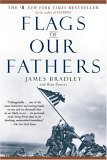
Flags of Our Fathers is based on the book Flags of Our Fathers by James Bradley and Ron Power, about the battle of Iwo Jima and the lives of some of the men after the battle.
The battle for Iwo Jima took place in February and March of 1945.
20,915 Japanese soldiers, and 6.821 U.S. soldiers gave their lives, as well as another 19,000 wounded, during those two months on Iwo Jima. The battle was fought in preparation for an invasion of the Japanese mainland. As horrific and mind boggling as this sounds - it pales, if that is possible, in comparison to the battle for Okinawa - a battle which tends to be lost to history.
The last battle of the Pacific Theatre took place on Okinawa beginning on April 1st of 1945 . There is an important difference between these two battles - Okinawa had a large indigenous population; Iwo Jima did not.
Over 150,000 civilians were killed in the battle for Okinawa. In addition to the civilian deaths, the military deaths were incomprehensible - about 100,000 Japanese and 12,500 United States airman, soldiers and sailors were killed in the 3 month battle for Okinawa.
These quotes from the Wikipedia article on the Battle for Okinawa provide some sort of glimpse into the horror of that war -
I can't begin to imagine...
Over ten inches of rain fell on Okinawa in last days of May 1945, the Japanese Army was dug into fortified caves and bunkers; mainly on the South end of the island. The U.S. used napalm and gasoline to extricate or...
It's more than I can talk about. I just don't know, can't know.
One thing I do know is that the men and women who served, and serve, their countries are true heroes. Our world would be a very different place if not for them.
My father was a rifleman in the U.S. Army 7th Infantry on Okinawa, wounded on June 21st, 1945. He received the Bronze Star and a Purple Heart. If he was alive I'm not sure if we'd talk about that time in his life or not. I don't think he ever thought of himself as a hero and was more interested in getting back to a farm in Montana and raising a family than reliving the war. I'm very proud of the fact that both he, and my grandfather in WWI, served their country.
The battle for Okinawa and tremendous loss of life was one of the reasons President Harry Truman elected to drop the Atomic bomb on Hiroshima on August 6th and Nagasaki in August 9th of 1945 in an attempt to put an end to the war without invading the Japanese mainland, with the forseen loss of military and civilian life.
Victory in Europe (V-E day) was declared on May 8th, and Victory in Japan (V-J day) on August 15th of 1945.
A quote from Clint Eastwood reads in part -
"These 2 films are not about who won or who lost. It is about what war does to people, people who would’ve gone on to live their full lives otherwise. From whichever perspective, soldiers who sacrifice their lives in battle are worthy of respect. These 2 films are my way of paying tribute to those fallen soldiers. By telling the stories of these men from both perspectives, it is my hope that the films will illustrate the things in common that both sides shared, and allow us to look at that difficult time in our history with entirely new eyes."
He is also quoted as saying he does “not want to make another bullshit John Wayne film”.
Flags of Our Fathers is based on the book Flags of Our Fathers
by James Bradley and Ron Power, about the battle of Iwo Jima and the lives of some of the men after the battle.
The battle for Iwo Jima took place in February and March of 1945.
20,915 Japanese soldiers, and 6.821 U.S. soldiers gave their lives, as well as another 19,000 wounded, during those two months on Iwo Jima. The battle was fought in preparation for an invasion of the Japanese mainland. As horrific and mind boggling as this sounds - it pales, if that is possible, in comparison to the battle for Okinawa - a battle which tends to be lost to history.
The last battle of the Pacific Theatre took place on Okinawa beginning on April 1st of 1945 . There is an important difference between these two battles - Okinawa had a large indigenous population; Iwo Jima did not.
Over 150,000 civilians were killed in the battle for Okinawa. In addition to the civilian deaths, the military deaths were incomprehensible - about 100,000 Japanese and 12,500 United States airman, soldiers and sailors were killed in the 3 month battle for Okinawa.
These quotes from the Wikipedia article on the Battle for Okinawa provide some sort of glimpse into the horror of that war -
- "7,613 were killed and missing in action, and the remaining sixty-four-odd thousand were almost equally divided between those wounded seriously enough to be out of action more than a week and non-battle casualties, chiefly victims of battle fatigue." (Feifer)
- "Ninety percent of the buildings on the island were completely destroyed, and the lush tropical landscape was turned into a vast field of mud, lead, decay and maggots."
- "By the end of May monsoon rains which turned contested slopes and roads into a morass exacerbated both the tactical and medical situations. The ground advance began to resemble a World War I battlefield as troops became mired in mud and flooded roads greatly inhibited evacuation of wounded to the rear. Troops lived on a field sodden by rain, part garbage dump and part graveyard. Unburied Japanese bodies decayed, sank in the mud, and became part of a noxious stew. Anyone sliding down the greasy slopes could easily find their pockets full of maggots at the end of the journey."
- "While on Okinawa, the marines and soldiers were going through their crucible of hell brought on by rain, heat, poison snakes, mosquitoes...the stench of human feces and rotting human flesh filled with maggots...."
I can't begin to imagine...
Over ten inches of rain fell on Okinawa in last days of May 1945, the Japanese Army was dug into fortified caves and bunkers; mainly on the South end of the island. The U.S. used napalm and gasoline to extricate or...
It's more than I can talk about. I just don't know, can't know.
One thing I do know is that the men and women who served, and serve, their countries are true heroes. Our world would be a very different place if not for them.
My father was a rifleman in the U.S. Army 7th Infantry on Okinawa, wounded on June 21st, 1945. He received the Bronze Star and a Purple Heart. If he was alive I'm not sure if we'd talk about that time in his life or not. I don't think he ever thought of himself as a hero and was more interested in getting back to a farm in Montana and raising a family than reliving the war. I'm very proud of the fact that both he, and my grandfather in WWI, served their country.
The battle for Okinawa and tremendous loss of life was one of the reasons President Harry Truman elected to drop the Atomic bomb on Hiroshima on August 6th and Nagasaki in August 9th of 1945 in an attempt to put an end to the war without invading the Japanese mainland, with the forseen loss of military and civilian life.
Victory in Europe (V-E day) was declared on May 8th, and Victory in Japan (V-J day) on August 15th of 1945.
Sunday, October 08, 2006
Montana Memories
I ran across this picture of wildflowers and an old house on Flickr today and it fit in with something I was thinking about before I went to sleep last night. This picture was taken by ShadowCatcher somewhere north of Flagstaff, Arizona - but it reminded me of Montana - north of the town of Columbus.
I was recalling the times in the Spring when my grandmother and mother, would take us on drives North of our home town of Columbus, Montana. We'd go out in the early evening to see the wildflowers that grew in that desert-like landscape, smell the sage, see a rabbit or two, maybe a deer, and be amazed that the prairie was in bloom with color.
You have to understand a little about that particular part of Montana to know why those trips were special. Columbus sits at the confluence of two beautiful rivers; the Yellowstone and Stillwater, which come together on the south side of Columbus.
As you head south from Columbus following the Stillwater River
you reach Absarokee, Fishtail, and then pass into the Absaroka Mountains. The landscape to the south is totally different than what you see going north. Driving north, and then hiking for a bit leads to Stillwater Lake high in the mountains.
As you drive across Montana from West to East, Columbus marks the point where you leave the mountains - or at least leave seeing mountains in the distance and start the long drive into what is thought of as Eastern Montana. I'm sure there is some argument about where Eastern Montana starts - some people would say Billings which is 40 miles to the East, but in my mind Columbus is the center of the East/West (and North/South) universe.
The wildflower drives to the North were unique because we rarely drove north. The town of Rapelje is the nearest town to the north, about 25 miles or so. In the twenty or so years I was in and out of Columbus I think I was in Rapelje once - maybe twice. There was just no reason to go that way - sorry to say that Rapeljeites; I'm sure it's a fine town, and I imagine at my age having lived in the sometimes seemingly overly populated city, and driving on our crowded highways for some time, Rapelje would be quite beautiful to me today.
Wikipedia says, "Rapelje is a small farming and ranching community in south central Montana. The high school is well-known for its successful six-man football team. There is a community cafe and post office in town."
Looking at the Yahoo map of that area I am guessing we drove North on the Rapelje road, then made a loop that included Meadow Muffin Road, Longhorn Drive and Sheepdip Road. I say I'm guessing because none of these roads were marked and as far as I know nobody ever called them anything. Directions would be more like - head north to the Smith's place, take a right at Keyser Creek and then another right at the fork in the road.

I was recalling the times in the Spring when my grandmother and mother, would take us on drives North of our home town of Columbus, Montana. We'd go out in the early evening to see the wildflowers that grew in that desert-like landscape, smell the sage, see a rabbit or two, maybe a deer, and be amazed that the prairie was in bloom with color.
You have to understand a little about that particular part of Montana to know why those trips were special. Columbus sits at the confluence of two beautiful rivers; the Yellowstone and Stillwater, which come together on the south side of Columbus.
As you head south from Columbus following the Stillwater River
you reach Absarokee, Fishtail, and then pass into the Absaroka Mountains. The landscape to the south is totally different than what you see going north. Driving north, and then hiking for a bit leads to Stillwater Lake high in the mountains.

As you drive across Montana from West to East, Columbus marks the point where you leave the mountains - or at least leave seeing mountains in the distance and start the long drive into what is thought of as Eastern Montana. I'm sure there is some argument about where Eastern Montana starts - some people would say Billings which is 40 miles to the East, but in my mind Columbus is the center of the East/West (and North/South) universe.
The wildflower drives to the North were unique because we rarely drove north. The town of Rapelje is the nearest town to the north, about 25 miles or so. In the twenty or so years I was in and out of Columbus I think I was in Rapelje once - maybe twice. There was just no reason to go that way - sorry to say that Rapeljeites; I'm sure it's a fine town, and I imagine at my age having lived in the sometimes seemingly overly populated city, and driving on our crowded highways for some time, Rapelje would be quite beautiful to me today.
Wikipedia says, "Rapelje is a small farming and ranching community in south central Montana. The high school is well-known for its successful six-man football team. There is a community cafe and post office in town."
Looking at the Yahoo map of that area I am guessing we drove North on the Rapelje road, then made a loop that included Meadow Muffin Road, Longhorn Drive and Sheepdip Road. I say I'm guessing because none of these roads were marked and as far as I know nobody ever called them anything. Directions would be more like - head north to the Smith's place, take a right at Keyser Creek and then another right at the fork in the road.
Outsourcing America
I've seen Byron Dorgan, Senator from North Dakota on T.V. a couple of times lately, most recently on The Colbert Report.
He makes some simple and seemingly obvious points that we can only hope begin to sink in and cause a change in the people we elect to represent us in Congress.
For example - 35 years ago the biggest corporation was General Motors where people went to work for a lifetime with good pay and benefits. Now the largest corporation in America is WalMart which provides it's workers an average pay of 18 to 19 thousand dollars a year, with few if any benefits, while buying products from countries that provide no labor rights or environmental protections, and undercut American workers by accepting wages that are pennies on the dollar.
We have a 200 billion dollar a year trade deficit with China. We imported 700,000 cars from Korea and exported 4,000 cars to Korea last year. Neither China or Korea are interested in balancing trade - they are perfectly happy to take our jobs and sell us goods. At some point the American public needs to realize that what's good for corporations and what's good for America are not always the same thing.
We can't have a free market until the countries we trade with make it a fair market by paying living wages, providing worker protections, labor rights, and benefits - comparable to what we enjoy in America. Asking American workers, or their children, to buck up and work harder, or in the case of Thomas Friedman - to educate themselves out of this, is ludicrous. The world is anything buy flat - it's a tremendously unlevel playing field.
Byron Dorgan says we as a nation need to operate from the point of view that we will help other countries pull themselves up - not allow them to pull us down.
Byron Dorgan sounds like a reasonable person talking about common-sense ideas for maintaining the standard of living and opportunities that the U.S. has achieved though decades of work, sacrifice and legislation. If not for ourselves for our children.
Listen to an interview with Byron Dorgan on "Take This Job and Ship It" on Bill Thompson's Eye on Books site.
He makes some simple and seemingly obvious points that we can only hope begin to sink in and cause a change in the people we elect to represent us in Congress.
For example - 35 years ago the biggest corporation was General Motors where people went to work for a lifetime with good pay and benefits. Now the largest corporation in America is WalMart which provides it's workers an average pay of 18 to 19 thousand dollars a year, with few if any benefits, while buying products from countries that provide no labor rights or environmental protections, and undercut American workers by accepting wages that are pennies on the dollar.
We have a 200 billion dollar a year trade deficit with China. We imported 700,000 cars from Korea and exported 4,000 cars to Korea last year. Neither China or Korea are interested in balancing trade - they are perfectly happy to take our jobs and sell us goods. At some point the American public needs to realize that what's good for corporations and what's good for America are not always the same thing.
We can't have a free market until the countries we trade with make it a fair market by paying living wages, providing worker protections, labor rights, and benefits - comparable to what we enjoy in America. Asking American workers, or their children, to buck up and work harder, or in the case of Thomas Friedman - to educate themselves out of this, is ludicrous. The world is anything buy flat - it's a tremendously unlevel playing field.
Byron Dorgan says we as a nation need to operate from the point of view that we will help other countries pull themselves up - not allow them to pull us down.
Byron Dorgan sounds like a reasonable person talking about common-sense ideas for maintaining the standard of living and opportunities that the U.S. has achieved though decades of work, sacrifice and legislation. If not for ourselves for our children.
Listen to an interview with Byron Dorgan on "Take This Job and Ship It" on Bill Thompson's Eye on Books site.


Saturday, October 07, 2006
From Freud to Frankl
Dr. C. George Boeree, a professor in the Psychology Department at Shippensburg University located in Shippensburg, PA. has a great resource available on his website called Personality Theories.
He has included clearly written, interesting, summaries of the work for some of psychology's great writers and thinkers of the 20th century, including,
Sigmund Freud
Anna Freud
Erik Erikson
Carl Jung
Otto Rank
Alfred Adler
Karen Horney
Albert Ellis
Erich Fromm
B. F. Skinner
Hans Eysenck and others
Albert Bandura
Gordon Allport
George Kelly
Snygg and Combs
Abraham Maslow
Carl Rogers
Ludwig Binswanger
Medard Boss
Viktor Frankl
Rollo May
Jean Piaget
Sociobiology
Buddhist Psychology
The Ultimate Theory of Personality
I gound the site in a backwards sort of way while reading about Hugh Prather the author of Notes to Myself: My Struggle to Become a Person . Prather was a student of Carl Rogers. Thirty years ago I thought Prather's book was pretty good - I'd have to read it again to see if it still resonates. You might find it interesting.

p.s. I noticed that Hugh Prather's book is on the S.F.Heart's reading list for wannabe hippies which probably explains why I was reading it 30 some years ago. Those were some groovy times man.
He has included clearly written, interesting, summaries of the work for some of psychology's great writers and thinkers of the 20th century, including,
Sigmund Freud
Anna Freud
Erik Erikson
Carl Jung
Otto Rank
Alfred Adler
Karen Horney
Albert Ellis
Erich Fromm
B. F. Skinner
Hans Eysenck and others
Albert Bandura
Gordon Allport
George Kelly
Snygg and Combs
Abraham Maslow
Carl Rogers
Ludwig Binswanger
Medard Boss
Viktor Frankl
Rollo May
Jean Piaget
Sociobiology
Buddhist Psychology
The Ultimate Theory of Personality
I gound the site in a backwards sort of way while reading about Hugh Prather the author of Notes to Myself: My Struggle to Become a Person
. Prather was a student of Carl Rogers. Thirty years ago I thought Prather's book was pretty good - I'd have to read it again to see if it still resonates. You might find it interesting.
____________________________
p.s. I noticed that Hugh Prather's book is on the S.F.Heart's reading list for wannabe hippies which probably explains why I was reading it 30 some years ago. Those were some groovy times man.
Wednesday, October 04, 2006
Chubby and Inactive - Hey That's Me
I was watching one of the local public access channels and saw Mike Huckabee Governor of Arkansas speaking at a dinner held by the Washington Policy Center in Seattle a couple of weeks ago.
He had some fascinating (and disturbing) things to say about the state of our health and what it is doing to our ability to function as individuals and as a society. Our tendency to over eat, under exercise and smoke has helped create our current health care woes.
The average weight of Americans has increased 1 pound per year for the last 40 years, having gone from 140 pounds in 1960 to 180 pounds in 2000.
Not only does being a nation of fatties constitute a major competitive disadvantage; due to the increasing cost of health care to treat all the avoidable health problems associated with obesity and lack of exercise, but also by the simple fact that fat people don't have the energy (or just generally feel so bad) that they can't work an 8 hour day.
We spend about 16% of our gross domestic product on health care which is about 2 times what the next closest country spends.
Type II diabetes used to be called "adult onset diabetes". That's not a good name for it anymore since it's afflicting younger people at an alarming rate. The increase is associated with poor diets and lack of exercise.
Our increasing girth and weight has caused challenges for other people as well. For example architects - since stairways and emergency exits are designed assuming an average person is so wide and can climb or descend stairs at a certain rate, as well as boat builders, boat designers - a six person boat in 1960 would be a 4.6 person boat today (four 180 pounders plus one 120 pound stick person). I'm sure elevator manufacturers, airplane builders, bungee jump designers all have to take into account the popularity in America of being bigger and beefier.
Mike Huckabee suggests we can fight the battle on obesity and lack of exercise using the lessons from other social changes made in the U.S. He mentioned the "Beautify America" campaign started by Lady Bird Johnson, the use of seat belts and the declining popularity of smoking. All of these things started as cultural changes, thanks to the media and concerned citizens; and only after the cultural shift were laws enacted to enforce the cultural norms (fines for littering, mandating seat belts in cars, limitations on smoking in public places).
The point being that legislating people to lose weight, exercise and practice preventative (rather than curative) health will not work, e.g. the idea that we can force kids to lose weight by taking sugared pop out of machines in school or that we would reduce heart disease by banning trans-fats in NYC.
He suggests that we reward people who take care of themselves by providing well days, or personal days - rather than sick days, and that health insurance pay for nutritional counseling, exercise coaching - rather than waiting until someone is sick and paying for hundred thousand dollar triple bypass surgeries. He mentioned that we provide smoke breaks for people - why not walking breaks?
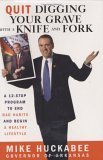
Mike Huckabee is pretty interesting. He was a chubby (maybe fat) non-athletic kid who lost weight as an adult and ran his first marathon in his late 40's. He must of been doing something right. By the way he has written a book - Quit Digging Your Grave with a Knife and Fork: A 12-Stop Program to End Bad Habits and Begin a Healthy Lifestyle
After that I think I need something less serious. The New Yorker has a funny article on being thin (or is it fat?) this week by Ian Frazier, called "Thin Enough".
He had some fascinating (and disturbing) things to say about the state of our health and what it is doing to our ability to function as individuals and as a society. Our tendency to over eat, under exercise and smoke has helped create our current health care woes.
The average weight of Americans has increased 1 pound per year for the last 40 years, having gone from 140 pounds in 1960 to 180 pounds in 2000.
Not only does being a nation of fatties constitute a major competitive disadvantage; due to the increasing cost of health care to treat all the avoidable health problems associated with obesity and lack of exercise, but also by the simple fact that fat people don't have the energy (or just generally feel so bad) that they can't work an 8 hour day.
We spend about 16% of our gross domestic product on health care which is about 2 times what the next closest country spends.
Type II diabetes used to be called "adult onset diabetes". That's not a good name for it anymore since it's afflicting younger people at an alarming rate. The increase is associated with poor diets and lack of exercise.
Our increasing girth and weight has caused challenges for other people as well. For example architects - since stairways and emergency exits are designed assuming an average person is so wide and can climb or descend stairs at a certain rate, as well as boat builders, boat designers - a six person boat in 1960 would be a 4.6 person boat today (four 180 pounders plus one 120 pound stick person). I'm sure elevator manufacturers, airplane builders, bungee jump designers all have to take into account the popularity in America of being bigger and beefier.
Mike Huckabee suggests we can fight the battle on obesity and lack of exercise using the lessons from other social changes made in the U.S. He mentioned the "Beautify America" campaign started by Lady Bird Johnson, the use of seat belts and the declining popularity of smoking. All of these things started as cultural changes, thanks to the media and concerned citizens; and only after the cultural shift were laws enacted to enforce the cultural norms (fines for littering, mandating seat belts in cars, limitations on smoking in public places).
The point being that legislating people to lose weight, exercise and practice preventative (rather than curative) health will not work, e.g. the idea that we can force kids to lose weight by taking sugared pop out of machines in school or that we would reduce heart disease by banning trans-fats in NYC.
He suggests that we reward people who take care of themselves by providing well days, or personal days - rather than sick days, and that health insurance pay for nutritional counseling, exercise coaching - rather than waiting until someone is sick and paying for hundred thousand dollar triple bypass surgeries. He mentioned that we provide smoke breaks for people - why not walking breaks?
Mike Huckabee is pretty interesting. He was a chubby (maybe fat) non-athletic kid who lost weight as an adult and ran his first marathon in his late 40's. He must of been doing something right. By the way he has written a book - Quit Digging Your Grave with a Knife and Fork: A 12-Stop Program to End Bad Habits and Begin a Healthy Lifestyle
______________________________
After that I think I need something less serious. The New Yorker has a funny article on being thin (or is it fat?) this week by Ian Frazier, called "Thin Enough".
Tuesday, October 03, 2006
In Praise of the Imperfect Life, by Philip Simmons
In Praise of the Imperfect Life, by Philip Simmons is a very thoughtful piece of writing. I found his discussion of the story of Job to be one of the clearest expositions I've ever read.
Job (pronounced Jobe) is the story of a man who was tormented by God. It's a book from the Old Testament that tries to get near why God would allow bad things to happen.
Phillip Simmons writes about the point in the story of Job where his wife asks him why he doesn't just give up and curse God -
The idea that religion is multi-dimensional has been bouncing around in my head for a few weeks. Religion is multi-dimensional because we are. Religious writings, like people, follow a path towards (and sometimes away from) civilization.
On a more personal note we can be childlike, and thus affirmed and consoled by a childlike faith in a father-figure type deity (for example Buddha, Jesus or God). We can also be adults, questioning, wondering, and challenging until we reach the limits of our logic, ability to think, and declare it to be a mystery and either take a leap of faith and believe something, or in the case of atheists claim to know the unknowable, or be agnostic about it and admit we don't know...it's a big universe out there my friend.
I'd never put down the childlike faith of another person. In fact I think it can be wonderful and wonder filled to be as childlike as we can be.
Here's a story about childlike faith I heard a minister tell, not too long ago -
Sometimes a childlike faith is all we have.
The more you look at the childlike teachings the more you see that some of it isn't childlike at all. Take the doctrine of the holy Trinity which proposes the Father, the Son and the Holy Spirit are one. That's not a simple concept by any means, and very controversial in some circles.
It's not much of a stretch to say that since I'm spirit-filled, I'm part of God and since I'm part of God - I'm not so sure I need the Church to guide my ways. Luckily I'm not living in medieval times because that's a heretical thought. By the way - It's interesting to read in this article on heresy from Kenyon College which says "that the Church never executed anyone for heresy. Rather, the Church turned heretics over to secular governments for execution."
It's also not much of a stretch to go from being agnostic (not knowing) to gnostic (knowing) particularly if you have access to some secret writings.
From Elaine Pagel's From Jesus to Christ: the Story of the Storytellers: the Gnostic Gospels -
Job (pronounced Jobe) is the story of a man who was tormented by God. It's a book from the Old Testament that tries to get near why God would allow bad things to happen.
Phillip Simmons writes about the point in the story of Job where his wife asks him why he doesn't just give up and curse God -
"And here Job makes the most extraordinary answer: "Shall we receive good at the hand of God, and not receive the bad?"
In these words I find a challenge that shakes me to the core. For those who dismiss traditional religion as offering a simplified and sentimental version of reality, Job offers a darker, more complex vision than those we may remember being taught in Sunday school. For those who think reason has the final say in human affairs, Job reminds us how little reason avails us when we try to understand all that befalls us. For those who are religious yet want to think of God only as the God of goodness and love, for those for whom prayer is always a turning toward the light, for those of us who seek in spiritual experience nothing but sweetness and harmony, Job offers a severer, more inclusive view. "Shall we receive good at the hand of God, and not receive the bad?" Job now knows that God is the God of good and of evil, light and darkness, sweet and bitter, harmony and discord. Hindus embody this truth in the god Shiva, who both creates and destroys. The Qur'anic phrase, La'illaha il'Allahu, teaches there is nothing that is not from God, that everything, birth and death, joy and suffering, the green spurt of youth and the slow decay of age, bread, and excrement, our sweetest singing and our cries of agony, all of it is from God."
Phillip Simmons continues in this vein to say,
"But maybe we're asking the wrong thing of God. Rhyme and reason, after all, are human values, not divine ones. Wanting human suffering to fit some divine plan is like wanting to fly an airplane above tornado wreckage and see that it spells out song lyrics or a cure for acne. At some point in life, in the face of illness, violence, accident, or injustice, each of us confronts the possibility that rhyme and reason may not be on God's agenda. This, of course, leads many people to dispense with God and religion altogether. In workshops I've led, when people explain their reasons for turning away from religion, most often I've heard them cite some instance of suffering, either global or personal: religion hasn't ended war; it doesn't explain why a boy's sister had to die of leukemia. I'm not sure how to answer such charges except to suggest that perhaps we shouldn't turn to religion for solutions and explanations of this sort. The first of Buddhism's Four Noble Truths is the one that our experience most easily confirms: that to be human is to suffer. God, the power that creates and sustains the universe in each moment and has given us our very lives, doesn't owe us reasons."
____________________________
The idea that religion is multi-dimensional has been bouncing around in my head for a few weeks. Religion is multi-dimensional because we are. Religious writings, like people, follow a path towards (and sometimes away from) civilization.
On a more personal note we can be childlike, and thus affirmed and consoled by a childlike faith in a father-figure type deity (for example Buddha, Jesus or God). We can also be adults, questioning, wondering, and challenging until we reach the limits of our logic, ability to think, and declare it to be a mystery and either take a leap of faith and believe something, or in the case of atheists claim to know the unknowable, or be agnostic about it and admit we don't know...it's a big universe out there my friend.
I'd never put down the childlike faith of another person. In fact I think it can be wonderful and wonder filled to be as childlike as we can be.
______________________________
Here's a story about childlike faith I heard a minister tell, not too long ago -
She was on call for a local hospital and got a call late at night. She never knew what she would find at the hospital when she entered the room and pulled back the curtain in the emergency room. On this night when she entered the room - a young mother was sitting on a chair, rocking, crying inconsolably, holding a lifeless baby.
She had gone out to buy cocaine and left the baby in the care of the 3 year old brother. In those few minutes the baby drowned in the bathtub. Nothing the minister could say reached the woman.
A priest was called, since the woman was a Catholic. The young priest arrived, with his vestments and book - the trappings - the ritual. He sat with the woman and repeated the Hail Mary - over and over and over - the woman was able to calm herself and let the baby go.
Sometimes a childlike faith is all we have.
________________________________
The more you look at the childlike teachings the more you see that some of it isn't childlike at all. Take the doctrine of the holy Trinity which proposes the Father, the Son and the Holy Spirit are one. That's not a simple concept by any means, and very controversial in some circles.
It's not much of a stretch to say that since I'm spirit-filled, I'm part of God and since I'm part of God - I'm not so sure I need the Church to guide my ways. Luckily I'm not living in medieval times because that's a heretical thought. By the way - It's interesting to read in this article on heresy from Kenyon College which says "that the Church never executed anyone for heresy. Rather, the Church turned heretics over to secular governments for execution."
It's also not much of a stretch to go from being agnostic (not knowing) to gnostic (knowing) particularly if you have access to some secret writings.
From Elaine Pagel's From Jesus to Christ: the Story of the Storytellers: the Gnostic Gospels -
"...Yet to know oneself, at the deepest level, is simultaneously to know God; this is the secret of gnosis. Another gnostic teacher, Monoimus, says:
Abandon the search for God and the creation and other matters of a similar sort. Look for him by taking yourself as the starting point. Learn who it is within you who makes everything his own and says, "My God, my mind, my thought, my soul, my body." Learn the sources of sorrow:, joy, love, hate . . . If you carefully investigate these matters you will find him in yourself."
___________________________
Where does all this lead to?
Really nowhere we haven't already been. It's a circular sort of thing. Phillip Simmons quotes T.S. Elliot's fourth quartet "Little Gidding" where Elliot writes -
Wishing you a good week, filled with exploration.
Really nowhere we haven't already been. It's a circular sort of thing. Phillip Simmons quotes T.S. Elliot's fourth quartet "Little Gidding" where Elliot writes -
We shall not cease from explorationI love to think, to explore...and thank God, The Father, The Mother, The Holy Spirit, Buddha, Allah, The Big Daddy, The Kid, the Spook, the Source or whatever name we try and give the nameless - for the chance to live a short time on this good earth.
And the end of all our exploring
Will be to arrive where we started
And know the place for the first time.
Wishing you a good week, filled with exploration.
The Blind Leading the Blind
I met a man recently who got an award from two Jacks years ago.
Jack Lemmon and Jacques Cousteau presented him with an award for work he'd done giving blind people diving lessons.
He told me that part of the program included diving in lake to pick up trash, and because the visibility in that lake is so poor it put the sighted and sightless divers on equal ground. He thought that was very important.
That's an interesting idea - helping someone and allowing yourself to be on equal footing with them. Usually we operate from a position of power when giving to others. I'm well I can help the sick. I'm rich I can help the poor. I'm smart I can help tutor the ignorant. I'm strong I can help the weak.
I'm blind I can help the blind.
We are all flawed, weak - human. It's just a matter of how long it takes us to admit that fact. It might be that some people fool themselves, into thinking they have it all under control, up to and including the time of their death - provided their death comes quickly; it's pretty hard to show how perfect and strong one is as old age or illness take the things, people and capabilities we love away from us.
As paradoxical as it sounds giving up control is the key to recovery and happiness.
We could start by admitting that we are flawed, yet forgiven, well-loved, unique, and paradoxically the same - human beings, who don't have to be "on" all the time. We have our good days, hours, minutes and we have our bad. Giving up some of our ego allows us to be more flexible, growable, and last but not least takes away some of our tendency to not only judge ourselves, but others as well.
I often wonder about reading advice, devotions, scripture and getting the feeling that I've satisfied something in my self that tells me I'm special, different, better - even if it's better at admitting I'm flawed. Anything we do that tends to make us think "I" am not like "you", or "we" are not like "them", is a mistake. In fact any thing makes us believe there is a "them" is wrong at some fundamental level. It really doesn't matter who "they" are - from the worst to the best - there is more of them in us then we would ever dare admit. It is only by compartmentalizing, labeling, boxing off "them' that we make them less human, not us, less worthy of our concern, more worthy of our hate our contempt - our bombs, terrorism, and war.
We can't bear to admit that we are them and we can't stand the ambiguity of not-knowing (as absurd as that is) who they are. Why of course I know you - the Buddhist, Jew, Moslem, Hindu, Christian, Gay, Straight, Democrat, Republican, Conservative, Liberal, Businessman, White Collar, Blue Collar, Hourly, Salaried, with a Bachelor of Arts, of Science, a Masters, a Doctorate, College Educated, Uneducated, Smart, Dull, Artist, Artesian, Left Wing, Right Wing, Young, Old, Man, Woman, Adult, Child, American, European, African, Middle Eastern, Rich, Poor, Short, Tall, Fat, Skinny, person in the third row with the cap on. That's you right? That's what I thought. Boy I had you pegged.
We are all walking and falling. If we allow ourselves the flexibility to love our imperfections, to touch our wounds and others, to make them holy, then we have the opportunity - day by day, hour by hour, minute by minute - to get up and start all over again.
There's a second less obvious aspect to admitting we aren't perfect but are in fact perfect messes. By giving up our fake perfection we allow other people into our lives, energizing and giving life to the golden rule. We allow others to help us, which again somewhat paradoxically, helps them. People need help, people want to help - it's a perfect upward spiral.
Peace to you and may you find whatever it is that gives you a moment of joy.
Jack Lemmon and Jacques Cousteau presented him with an award for work he'd done giving blind people diving lessons.
He told me that part of the program included diving in lake to pick up trash, and because the visibility in that lake is so poor it put the sighted and sightless divers on equal ground. He thought that was very important.
That's an interesting idea - helping someone and allowing yourself to be on equal footing with them. Usually we operate from a position of power when giving to others. I'm well I can help the sick. I'm rich I can help the poor. I'm smart I can help tutor the ignorant. I'm strong I can help the weak.
I'm blind I can help the blind.
We are all flawed, weak - human. It's just a matter of how long it takes us to admit that fact. It might be that some people fool themselves, into thinking they have it all under control, up to and including the time of their death - provided their death comes quickly; it's pretty hard to show how perfect and strong one is as old age or illness take the things, people and capabilities we love away from us.
As paradoxical as it sounds giving up control is the key to recovery and happiness.
We could start by admitting that we are flawed, yet forgiven, well-loved, unique, and paradoxically the same - human beings, who don't have to be "on" all the time. We have our good days, hours, minutes and we have our bad. Giving up some of our ego allows us to be more flexible, growable, and last but not least takes away some of our tendency to not only judge ourselves, but others as well.
I often wonder about reading advice, devotions, scripture and getting the feeling that I've satisfied something in my self that tells me I'm special, different, better - even if it's better at admitting I'm flawed. Anything we do that tends to make us think "I" am not like "you", or "we" are not like "them", is a mistake. In fact any thing makes us believe there is a "them" is wrong at some fundamental level. It really doesn't matter who "they" are - from the worst to the best - there is more of them in us then we would ever dare admit. It is only by compartmentalizing, labeling, boxing off "them' that we make them less human, not us, less worthy of our concern, more worthy of our hate our contempt - our bombs, terrorism, and war.
We can't bear to admit that we are them and we can't stand the ambiguity of not-knowing (as absurd as that is) who they are. Why of course I know you - the Buddhist, Jew, Moslem, Hindu, Christian, Gay, Straight, Democrat, Republican, Conservative, Liberal, Businessman, White Collar, Blue Collar, Hourly, Salaried, with a Bachelor of Arts, of Science, a Masters, a Doctorate, College Educated, Uneducated, Smart, Dull, Artist, Artesian, Left Wing, Right Wing, Young, Old, Man, Woman, Adult, Child, American, European, African, Middle Eastern, Rich, Poor, Short, Tall, Fat, Skinny, person in the third row with the cap on. That's you right? That's what I thought. Boy I had you pegged.
We are all walking and falling. If we allow ourselves the flexibility to love our imperfections, to touch our wounds and others, to make them holy, then we have the opportunity - day by day, hour by hour, minute by minute - to get up and start all over again.
There's a second less obvious aspect to admitting we aren't perfect but are in fact perfect messes. By giving up our fake perfection we allow other people into our lives, energizing and giving life to the golden rule. We allow others to help us, which again somewhat paradoxically, helps them. People need help, people want to help - it's a perfect upward spiral.
Peace to you and may you find whatever it is that gives you a moment of joy.
Monday, October 02, 2006
You've Got to Be Taught
"No one is born to hating another person because of the colour of his skin, or his background, or his religion. People must learn to hate, and if they can learn to hate, they can be taught to love, for love comes more naturally to the human heart than its opposite. Even in the grimmest times in prison … I would see a glimmer of humanity in one of the guards."
Nelson Mandela
_____________________________________________
"You've got to be taught, to hate and fear,
You've got to be taught, from year to year,
It's got to be drummed in your dear little ear,
You've got to be carefully taught.
You've got to be taught to be afraid
Of people whose eyes are ugly made
And people whose skin is a different shade.
You've got to be carefully taught.
You've got to be taught, before it's too late,
Before you are six or seven or eight
To hate all the people your relatives hate
You've got to be carefully taught,
You've got to be carefully taught"
from the musical "South Pacific", "You've Got To Be Carefully Taught", music by Richard Rodgers, lyrics by Oscar Hammerstein
Subscribe to:
Posts (Atom)